+86-18863350588
 English
 Français
 Deutsch
 Español

PE, PLA and Aqueous Cups: Which Coating Goes Bad First in Storage?
Content
The Short Answer: PLA Tends to Go First
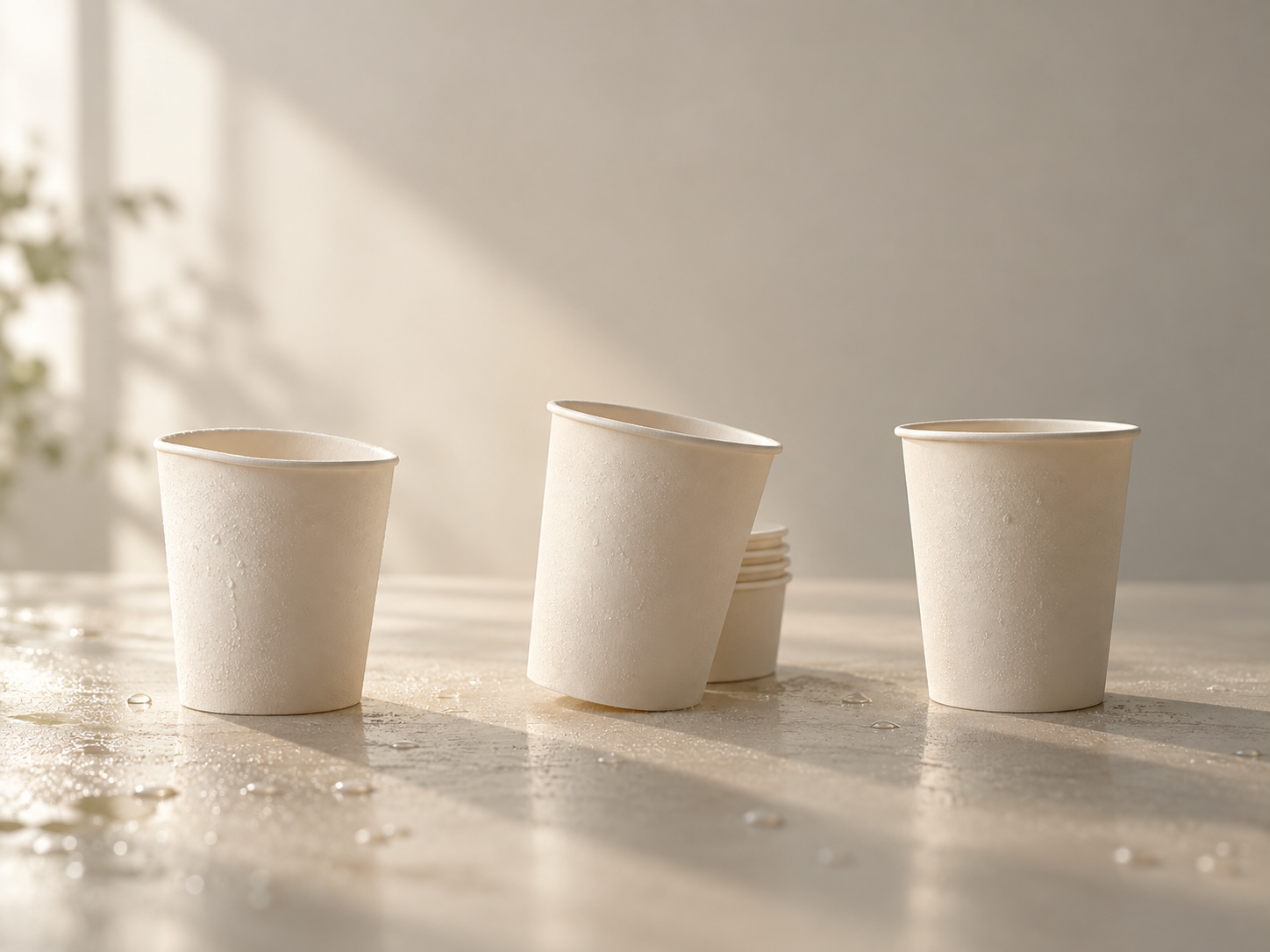
Put three pallets of cups in the same warm, humid warehouse and the PLA-lined pallet usually shows problems first. The aqueous-coated pallet follows, and the PE-lined pallet holds out longest. That order is a tendency, not a rule, because board quality, coating weight and carton packaging matter as much as the polymer itself.
Supplier guidance for lined paper cups in cool, dry storage commonly falls between one and two years. Treat that as a starting point and confirm it against the data sheet for your specific batch.
How Each Coating Ages on the Shelf
PE is a stable, heat-sealable film that has been the industry default for decades. It rarely breaks down in storage. When a PE cup fails after months in a warehouse, the culprit is usually the paperboard underneath absorbing moisture, not the film. If you stock single PE coated cups for cold drinks, expect the most forgiving shelf behavior of the three.
PLA is plant-based and softens at lower temperatures than PE. A pallet baking in a container yard or under a warehouse roof can end up with warped rims or cups that cling together. Prolonged damp storage is a second risk for the seams. Our PLA-lined paper cups for plastic-reduced menus should be treated as climate-sensitive stock.
Aqueous coatings are water-based polymer dispersions that bond to the fibers. Their weak point is heat. Patent filings on aqueous barrier coatings describe binders that soften and turn sticky at temperatures as low as 120-130°F during storage, shipping or converting, a problem known as blocking. Cups nested in tall stacks are exactly where this shows up. For a closer look at the product, see our water-based coated paper cups.
What Failure Looks Like at Each Stage
| Coating | Likely storage problem | Early warning sign | Risk in hot, humid storage |
|---|---|---|---|
| PE | Board absorbs moisture | Soft walls, damp cartons | Low |
| PLA | Warping, sticking, weaker seams | Oval cups, hard to separate | High |
| Aqueous | Blocking inside stacks | Cups cling or tear when pulled apart | Medium to high |
Most of these signs appear before a cup ever leaks, so a quick look at rim shape and nesting behavior tells you more than waiting for a customer complaint.
Where the Damage Really Comes From
Coating chemistry sets the ceiling, but the warehouse decides how close you get to it. Four conditions do most of the harm:
- Heat: sea containers, loading docks and top-floor storage can run far hotter than the building average.
- Humidity: paper fibers take on moisture, which weakens seams and can contribute to the layer separation we cover in why paper cups crack or delaminate.
- Compression: tall pallets press the lowest cartons for months, which deforms rims and encourages sticking.
- Sunlight: a pallet near a window or open door heats unevenly.
Warehouse Rules That Protect Coated Cups
- Record the production date on every pallet and ship oldest stock first.
- Keep pallets off the floor and away from exterior walls and roof lines.
- Reseal opened cartons straight away, since half-open cartons breathe humid air.
- Avoid stacking pallets on top of each other unless the carton rating allows it.
- Pull a few cups from every new lot. Check rim shape, separate a nested stack, then fill several with hot water and watch the seams.
- In hot or humid regions, order PLA and aqueous cups in smaller, more frequent lots.
Choosing a Coating for Slow-Moving Stock
If a SKU sits for months, such as a seasonal print or a backup size, PE or low-PE construction is the safer bet. Our paper cups with PE coating under 5% keep most of PE's stability while reducing plastic content.
If your market requires plastic-free cups, the same logic applies in reverse: buy closer to the point of use. Our plastic-free paper cups work best with a turnover plan, and this overview of low-PE and plastic-free coatings that cup mills accept explains the trade-offs behind each option.
Before placing a large order, ask your supplier for storage guidance tied to the exact coating and board. You can also review our quality control and testing standards to see how batches are checked before shipment.