+86-18863350588
 English
 Français
 Deutsch
 Español

Why Paper Cup Prices Keep Shifting in 2026: Pulp and Coating Costs Explained
Content
The Pulp Market Behind Every Paper Cup Quote
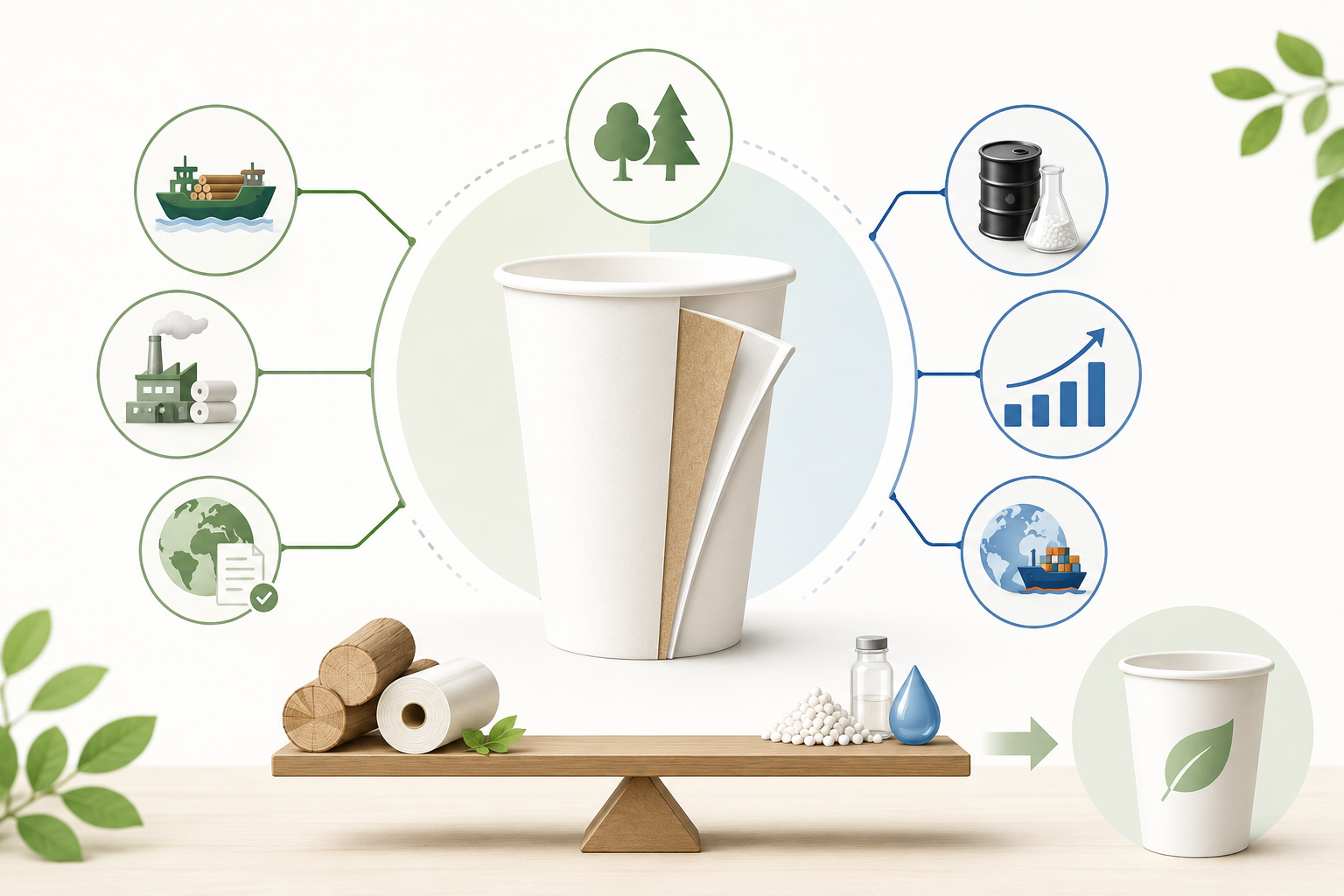
A hardwood pulp cargo priced around $600 a ton in early 2026 sits close to $705 a ton for the softwood grade used in higher-strength cup stock, and the gap between the two is narrowing fast. According to Golden Paper's 2026 pulp market outlook, hardwood pulp is expected to average near USD 600 per ton this year, with softwood pulp closer to USD 705 per ton, as the spread between the two grades continues to close. That single forecast sits underneath almost every paper cup quote a buyer receives this year.
Producers are also gaining leverage. Fastmarkets' 2026 pulp industry outlook forecasts operating rates climbing to 91% in 2026 and 2027, and 90% is generally the point where pricing power shifts from buyers back to producers. Once mills stop competing for volume, quotes stop being negotiable in the way they were during slower years.
Why the Volatility Is Structural, Not Seasonal
Three forces are pushing in the same direction at once, and none of them are temporary. On the supply side, Indonesia's cancellation of pulpwood concessions and the delayed OKI II project are expected to cut hardwood pulp supply by close to 770,000 tons, pulling inventories below balanced levels. That is a fiber-availability problem, not a demand blip.
Europe is adding cost pressure from a different direction. Since January 1, 2026, around 40% of European pulp mills lost access to free allowances under the EU Emissions Trading System, ending nearly two decades of surplus allowance income. Producers who used to absorb energy costs are now passing them through. Recent first-quarter results from European pulp and paper producers showed weaker or flat performance year on year, with pricing increases already implemented or planned across several segments, and executives have pointed to trade tension and geopolitical disruption as reasons for a cautious outlook heading into the rest of the year.
Layered on top of both is the compliance cost of sourcing fiber the right way. Wood-fiber traceability rules now shape which pulp is even eligible to enter a supply chain serving food-contact packaging, and that filtering effect tightens supply further before price is even discussed. We cover this in more detail in our practical FSC, EUDR and PEFC procurement guide for catering supplies.
The Coating Layer Matters More Than the Pulp Itself
Buyers tend to fixate on the pulp market because it is the most visible number, but the coating is usually where a paper cup quote moves the fastest. Whether a cup uses a PE lining, a PLA lining, or a water-based dispersion coating, that layer is priced off resin and petrochemical or bio-based feedstock markets that swing on a different cycle than wood fiber entirely.
A base paper price can hold steady for a full quarter while the coating resin behind it moves twice in the same period, simply because it tracks oil prices, PLA feedstock capacity, or regional trade measures on plastics rather than forestry output. For a buyer comparing two quotes, the coating line item is frequently the one worth asking about first, not the paper grade. For more detail on how coating type interacts with base paper choice, see our breakdown of bamboo pulp sourcing, coating options, and how they affect paper cup specs.
How to Protect Your Margins as a Buyer
The most direct hedge is fiber traceability at the source. We buy base paper directly from established mills, including APP, Sun Paper, and Enso, rather than through intermediaries reselling spot-market stock of uncertain origin. That means every roll can be traced back to a documented, food-grade source, which removes two risks at once: sudden quality drift and exposure to the most volatile end of the spot market.
Beyond supplier selection, a few habits make a measurable difference:
- Ask suppliers for quote validity windows upfront, since 30-day validity is becoming standard as mills reprice more often
- Watch the 90% operating rate threshold as a signal, since pricing power shifts to producers once mills approach it
- Split large annual volumes into staged purchase orders rather than one bulk commitment, so a single price spike does not lock in your full year's cost
- Confirm the coating type and its price basis separately from the base paper, since the two now move independently
None of this makes pulp or resin prices predictable. It does mean a buyer is negotiating with the same information a supplier has, instead of reacting to a quote after it has already changed. If you are defining specifications for an upcoming order, our guide on what to define before placing a custom paper bowl order walks through the same fiber and coating questions in more detail. You can also browse our current range of eco-friendly paper cup options built on traceable, food-grade base paper.