+86-18863350588
 English
 Français
 Deutsch
 Español

Paper Cups & PPWR: Why Plastic-Free Coatings Are the Future of EU Compliance
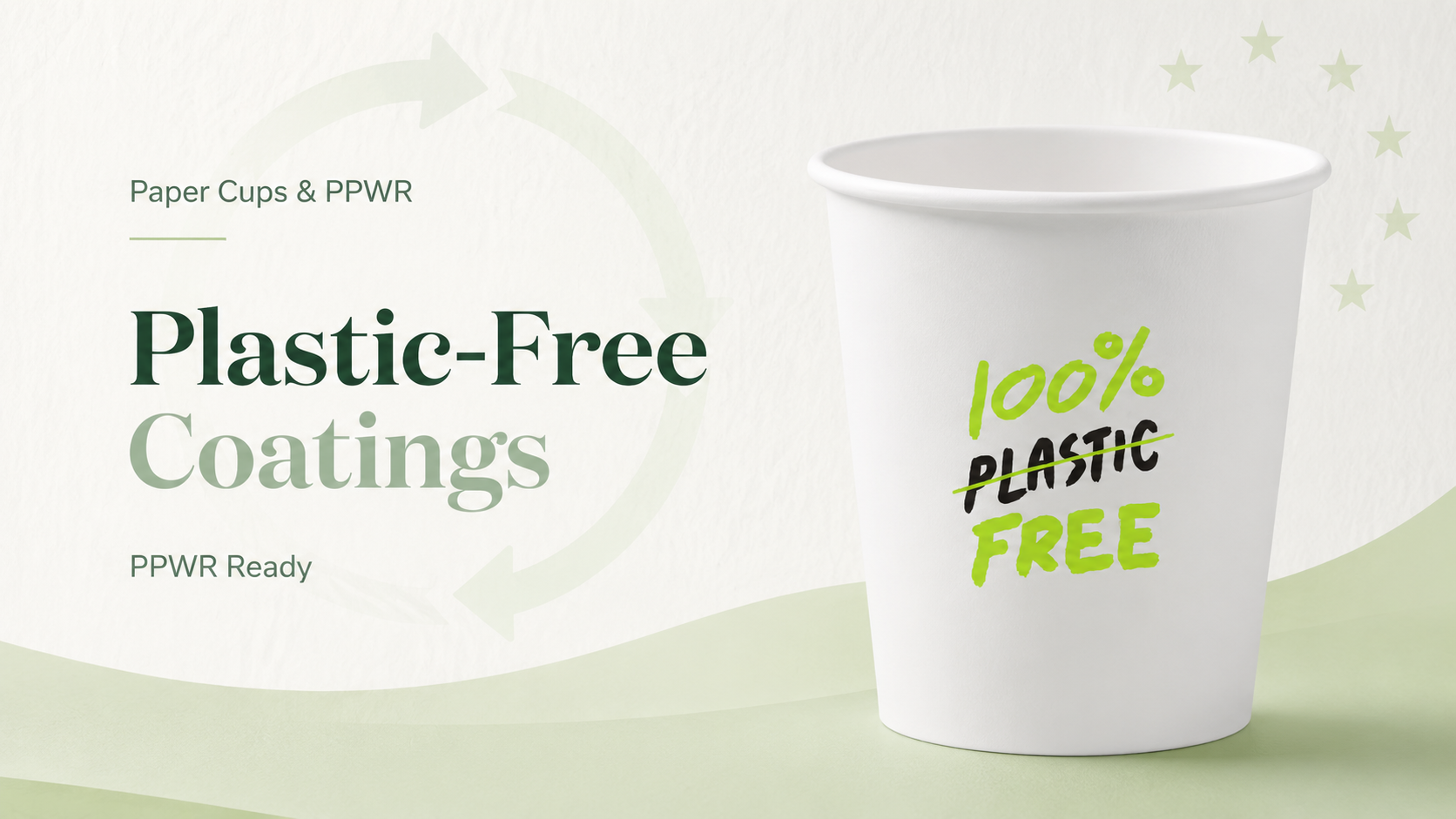
Most paper cups in circulation today share the same basic construction: a sheet of paperboard wrapped into a cylinder, sealed with a thin layer of polyethylene plastic to prevent leaks. That PE coating — typically applied at 10–18 g/m² — is what makes a paper cup functional. It is also what is putting conventional paper cups directly in the crosshairs of the EU's new Packaging and Packaging Waste Regulation (PPWR).
Our 100% Plastic-Free Paper Cups: A More Promising Direction
It is worth being precise about what "plastic-free" actually means in the current market. PE-lined cups, PLA-lined cups, and most aqueous coating formulations all still contain plastic or petroleum-derived components within their barrier layers — in varying proportions, but present nonetheless. Aqueous-coated cups are a genuine improvement over PE-lined cups, reducing plastic content significantly and improving recyclability, but they remain a step forward rather than a complete departure from plastic.
True 100% plastic-free paper cup production requires a fundamentally different approach to the barrier layer itself — one with zero plastic content, not merely reduced plastic content. This is the direction we have been working toward, and it is what our new product line represents.
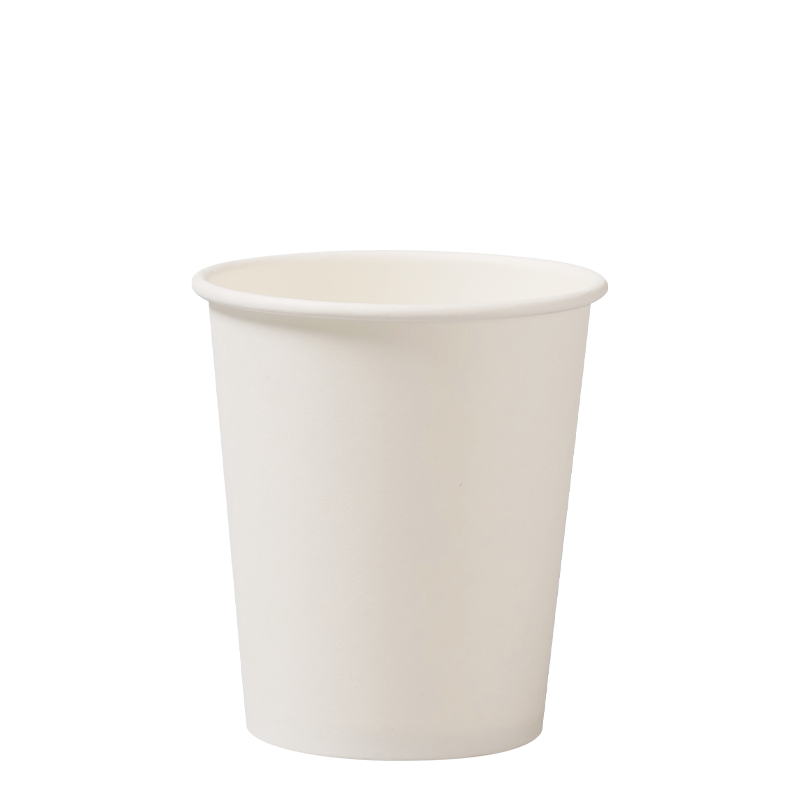
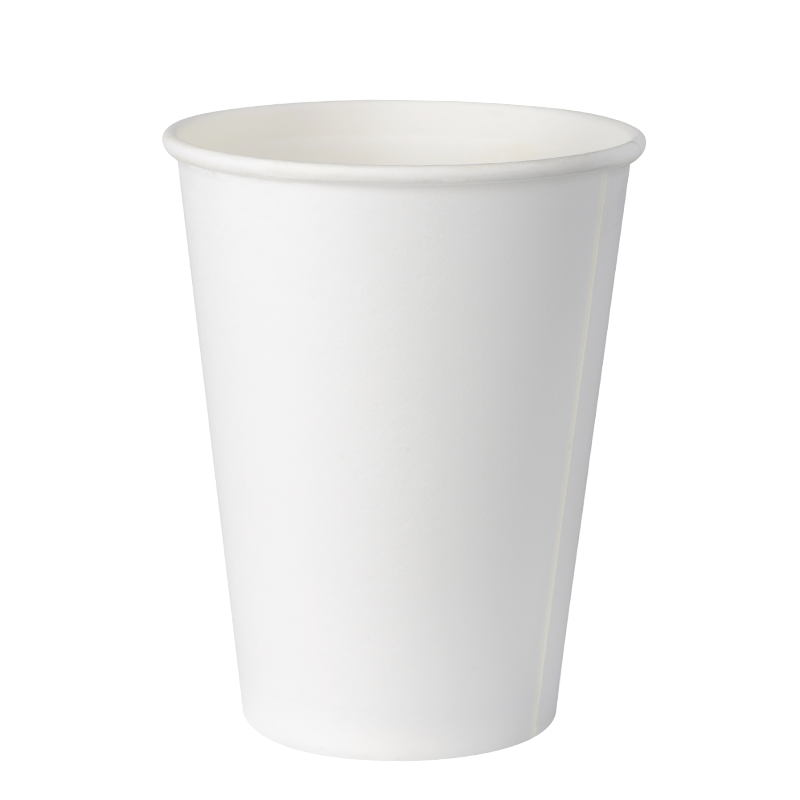
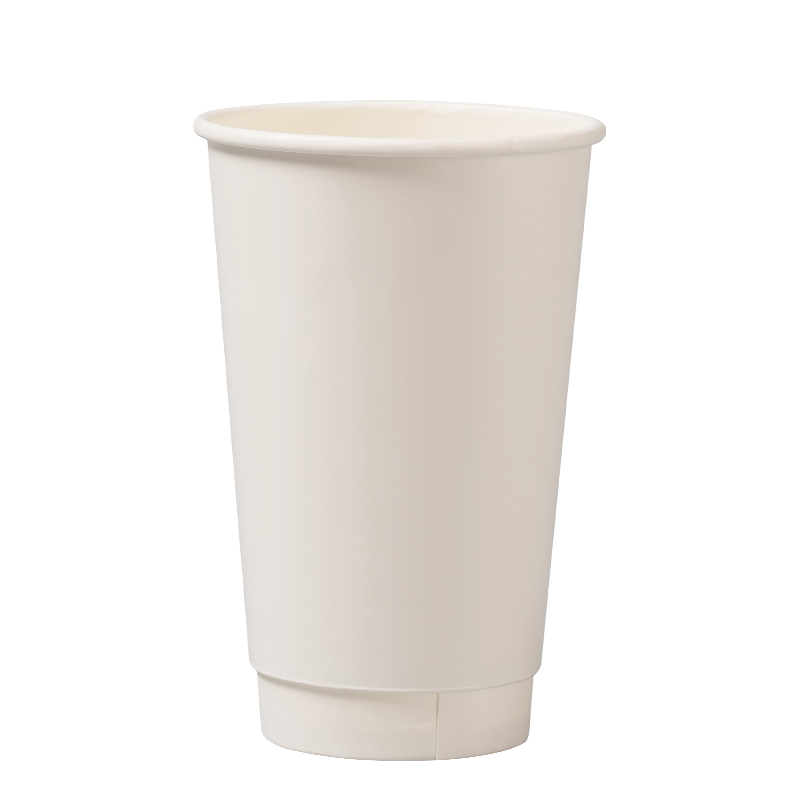
Our latest 100% plastic-free paper cups use a silicon-based coating — a proprietary formulation protected by seven patents. Unlike PE, PLA, or conventional aqueous coatings, this silicon-based barrier contains no plastic component of any kind.
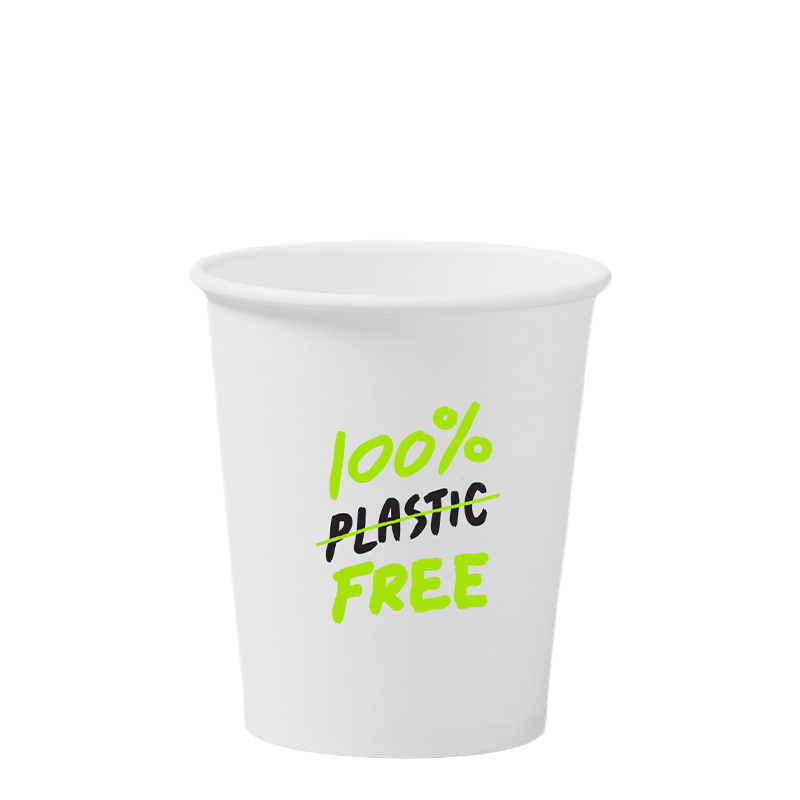
This is the technical breakthrough that makes the product genuinely aligned with where PPWR's DfR framework is heading. When the European Commission publishes its recyclability grading criteria in 2028, packaging that contains no plastic and recycles cleanly within existing systems is the profile most likely to achieve the highest grades — and the lowest EPR fee burden that follows from them.
We see silicon-based barrier technology as one of the most promising long-term directions for food-contact paper packaging. It resolves the coating problem at its root rather than managing it at the margins. For EU brands and distributors building procurement strategies that need to hold through 2030 and beyond, it represents a more durable answer than incremental plastic reduction.
The broader shift toward genuinely recyclable food packaging solutions is accelerating across the EU market. Our full eco-friendly paper cup range reflects every stage of that journey — and our 100% plastic-free silicon-coated line is where we believe the industry needs to go next. If you are sourcing for the EU market and want to learn more, we welcome the conversation.
References
- European Commission. (2025). Packaging and Packaging Waste Regulation (PPWR). Environment — European Commission. https://environment.ec.europa.eu/topics/waste-and-recycling/packaging-waste/packaging-packaging-waste-regulation_en
- European Union. (2025). Regulation (EU) 2025/40 of the European Parliament and of the Council on Packaging and Packaging Waste. Official Journal of the European Union. https://eur-lex.europa.eu/eli/reg/2025/40/oj/eng