+86-18863350588
 English
 Français
 Deutsch
 Español

Europe's Reusable Cup Deposit Schemes Face Setbacks | Eco Food Packaging
Content
The Policy Ambition That Isn't Matching Reality
Scotland's long-anticipated cup levy — a surcharge on single-use hot drink cups — was quietly shelved in early 2025, citing concerns about the financial burden on small café operators still recovering from rising costs. It was not an isolated retreat. Across Europe, reusable cup programs that once looked like the obvious successor to disposable packaging are stalling, scaling back, or being abandoned outright.
Germany's Mehrwegpflicht law has required food-service outlets to offer reusable packaging alternatives since January 2023. One year in, waste management firm REMONDIS described the results as "sobering" — with most takeaway drinks still leaving in single-use cups. The gap between policy intent and actual consumer behaviour has proved wider than most legislators anticipated.
Three Obstacles That Keep Reuse Schemes from Scaling
The consumer behaviour gap. Surveys reliably show high stated willingness to use reusable cups. Purchase data tells a different story. Remembering to carry a cup, remembering to return it, and navigating deposit systems that differ by city, café, or platform creates enough friction to deter all but the most committed users. This is a structural problem, not an attitudinal one — and behaviour-change programs have not yet closed it.
Fragmented infrastructure. Europe has no unified reusable-cup ecosystem. Multiple competing schemes operate incompatible cup formats and separate return-point networks. A café in Munich accepting one scheme's cup may reject another's. For operators managing multiple locations or franchise models, the logistics of washing, sorting, and redistributing cups across incompatible systems carries real overhead — rarely offset by deposit revenue. As one industry analysis from Germany noted, the lack of standardisation across systems makes participation confusing for consumers and operationally costly for businesses.
Policy stagnation and inconsistent enforcement. Beyond Scotland, Portugal paused its draft cup-levy legislation in 2024, and several Nordic municipalities that piloted voluntary return schemes reported return rates below 40%. Germany's Mehrwegpflicht carries no meaningful penalty for non-compliance. Consumer-rights organisations have pointed out that the law effectively places responsibility back on customers — who must actively request the reusable option rather than receiving it by default.
What European Packaging Law Actually Requires from Paper Cups
The EU's revised Packaging and Packaging Waste Regulation (PPWR), which entered into force in February 2025, introduces mandatory deposit-return systems for plastic bottles (≥ 0.1 L) and metal cans by 2029. Hot-drink paper cups are not included in those deposit-return mandates.
Instead, paper cups fall under the PPWR's recyclability and recycled-content targets. Single-use paper cups remain legally permissible across EU markets — provided they meet material composition standards. The regulatory pressure is real, but it is focused on what the cup is made of, not on eliminating the format entirely. For procurement teams, that distinction is important: compliance is achievable through material specification, not through a wholesale shift to reusable formats.
Eco Paper Cups as the Practical Middle Ground
For food-service brands navigating between reusable schemes that do not yet scale and tightening material regulations, eco-certified single-use paper cups have become the operational solution that works now. They require no infrastructure investment from the operator and no behaviour change from the consumer — two friction points that have proven difficult to overcome in every reusable scheme attempted so far.
The critical specification shift is away from PE (polyethylene) coatings toward alternatives compatible with recycling or composting streams. Aqueous-coated paper cups with no plastic lining are accepted by a growing number of European paper-recycling facilities and meet the PPWR's recyclability requirements without process changes at the point of sale. For operations with access to industrial composting, PLA-lined compostable paper cups certified to EN 13432 provide a verifiable end-of-life claim that holds up under the EU Green Claims Directive.
What Buyers Should Prioritise When Sourcing Now
Coating transparency over broad eco-labels. Specify aqueous or PLA — not generic terms like "eco" or "biodegradable," which often carry no enforceable meaning. Confirm which certification standard applies, and whether your end market's waste infrastructure can actually process the material.
Chain-of-custody certification. FSC certification addresses fibre origin; EUDR compliance (required for EU market access from December 2025) covers deforestation risk in the upstream supply chain. Both have moved from differentiator to baseline requirement in European B2B procurement over the past 18 months.
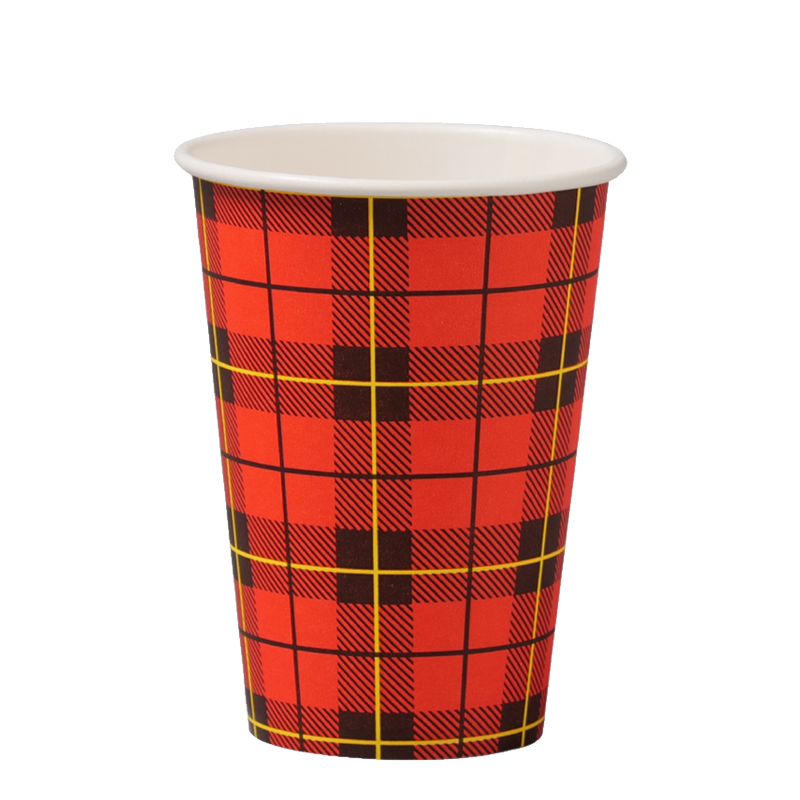
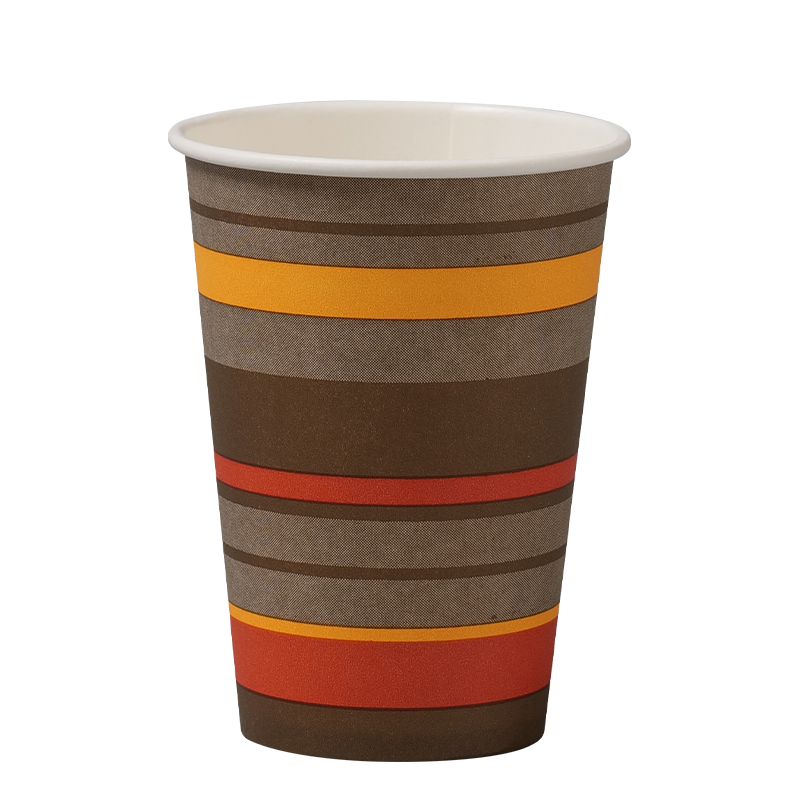
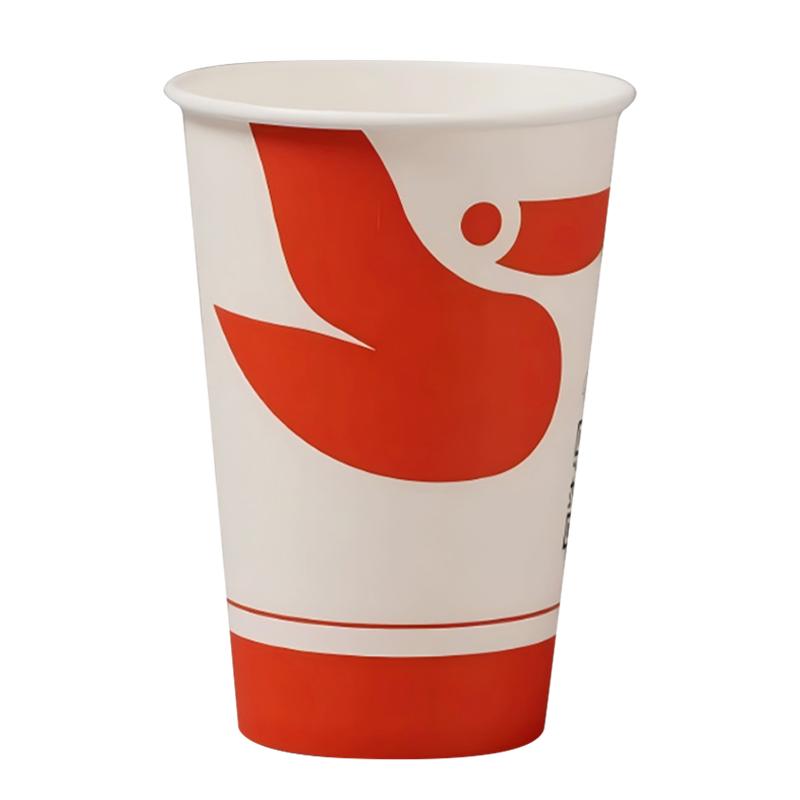
Brand-ready customisation. As deposit schemes stall and one-use cups retain their operational role, the cup itself becomes a daily brand touchpoint for millions of consumers. Custom-printed eco paper cups with FSC-certified board allow operators to meet compliance requirements while communicating sustainability commitments directly to the end consumer — without waiting for infrastructure that may be years away.
Our full range of eco-certified paper cups — aqueous hot cups, PLA compostable options, and custom-printed formats — are manufactured to EU market standards, with FSC and EUDR.