+86-18863350588
 English
 Français
 Deutsch
 Español

EU PPWR Regulation: What It Is and Why It Matters for Packaging
Content
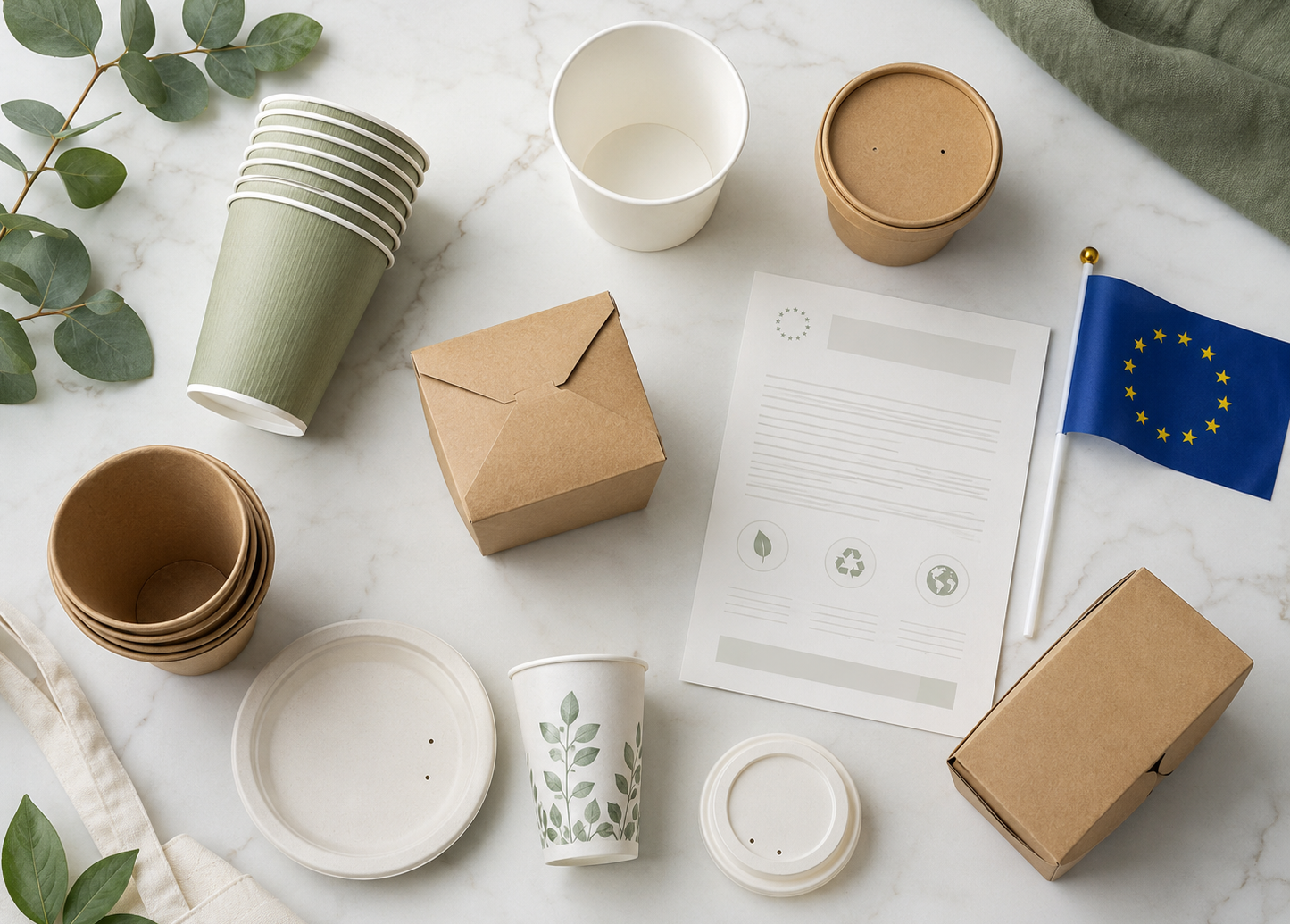
Packaging waste in the EU has grown by more than 20% over the past decade — and without intervention, it was projected to climb another 19% by 2030. Against that backdrop, the European Union made a decisive move: in December 2024, it adopted Regulation (EU) 2025/40, formally known as the Packaging and Packaging Waste Regulation (PPWR). The full legal text entered into force on 11 February 2025, with most provisions applying from 12 August 2026.
From Directive to Regulation: A Structural Shift in EU Packaging Law
For thirty years, the EU's packaging rules lived inside a Directive — meaning each Member State had to transpose the rules into its own national law. That approach produced a patchwork: different interpretations, different enforcement standards, different timelines. The PPWR replaces this with a directly applicable Regulation, which carries the same legal force in all 27 Member States from day one, with no national transposition required.
The practical implication is significant. Any business — whether a French retailer, a German manufacturer, or a Chinese supplier exporting to the EU — now faces a single unified rulebook. There is no longer a way to argue that one country's packaging standard is stricter or more lenient than another's. The regulation is the regulation, everywhere.
The PPWR sits squarely within the EU's broader Circular Economy Action Plan and its 2050 climate neutrality target. Packaging-related CO₂ emissions are equivalent to the total output of a small EU nation, and plastic packaging waste alone was forecast to grow by 46% by 2030 without intervention. The PPWR is the instrument designed to bend that curve.
Four Core Pillars of PPWR Compliance
The European Commission's official packaging policy page outlines four interlocking obligations that every packaging actor must understand.
The first is recyclability. From 1 January 2030, all packaging placed on the EU market must be designed for recycling — meaning it must be capable of being collected, sorted, and processed into high-quality secondary materials. By January 2028, the Commission will publish specific Design for Recycling (DfR) criteria and a grading system of A, B, and C. Only grades A through C will be permitted after 2030, and only A and B after 2038.
The second pillar is recycled content in plastic packaging. From 2030, mandatory minimum percentages of post-consumer recycled (PCR) content will apply. PET contact-sensitive packaging must contain at least 30% PCR by 2030, rising to 50% by 2040. Other contact-sensitive plastics face a 10% floor by 2030 and 25% by 2040. These thresholds are calculated as annual averages per manufacturing plant and per packaging type.
Third is packaging minimisation. The regulation sets a binding goal to cut packaging waste by 5% compared to 2018 levels by 2030. Practically, this means empty space in parcels must not exceed 40% of the total package volume — a rule with direct consequences for e-commerce operations. Packaging that is excessive by design, or that serves purely decorative purposes, will face increasing restrictions.
The fourth pillar is harmonised labelling. The era of confusing recycling symbols and country-specific sorting instructions ends with the PPWR. By August 2028, a unified EU-wide labelling system will require consistent recycling icons on all packaging — both for consumers sorting waste and for identifying reusable formats. Digital labelling options are also being developed through implementing acts.
Who Must Comply — and When
The PPWR casts a wide net. It applies to all packaging and packaging waste regardless of material, origin, or supply chain position — covering manufacturers, importers, distributors, retailers, and e-commerce operators. This explicitly includes packaging imported into the EU: a supplier in Asia shipping packaged goods to European buyers is within scope. Online marketplaces are also named as responsible actors when they handle logistics on behalf of third-party sellers.
Beyond product compliance, the regulation introduces Extended Producer Responsibility (EPR) obligations. Any company placing packaging on the EU market must register with the national EPR authority in each country of sale and report data on packaging type, weight, recyclability, and recycled content. EPR fees will eventually be eco-modulated — linked to the DfR recyclability grade — meaning packaging with lower grades will incur higher fees from 2030 onwards.
The compliance timeline is staged to allow preparation. Core obligations take effect in August 2026. Harmonised labelling follows in 2028. The full recyclability and recycled content requirements lock in by January 2030. Higher-performance recyclability thresholds (grades A and B only) apply from 2038. Businesses that begin auditing their packaging portfolios now — assessing recyclability gaps, mapping recycled content sourcing, and engaging EPR registries — will be far better positioned than those who wait.
For food and beverage packaging suppliers in particular, the PPWR is not a distant regulatory concern. The materials choices made today — coating types, liner compositions, structural designs — will determine whether products entering the EU market in 2026 and beyond are compliant, commercially viable, and competitively priced. Understanding the regulation's framework is the necessary first step. The move toward biodegradable and recyclable food packaging solutions is no longer a niche sustainability story — under PPWR, it is the baseline requirement for EU market access.
Companies looking to future-proof their packaging sourcing should evaluate not just whether their current packaging is technically compliant, but how its DfR grade will affect EPR costs, and whether their suppliers' eco-friendly paper cup range designed for recyclability aligns with the direction the regulation is heading. The 2026 application date is close — the time to act is now.
References
- European Union. (2025). Regulation (EU) 2025/40 of the European Parliament and of the Council on Packaging and Packaging Waste. Official Journal of the European Union. https://eur-lex.europa.eu/eli/reg/2025/40/oj/eng
- European Commission. (2025). Packaging and Packaging Waste Regulation (PPWR). Environment — European Commission. https://environment.ec.europa.eu/topics/waste-and-recycling/packaging-waste/packaging-packaging-waste-regulation_en