+86-18863350588
 English
 Français
 Deutsch
 Español

How Big Has the Cup-Carrier Category Gotten Because of Delivery?
Content
The Number Behind the Quiet Growth
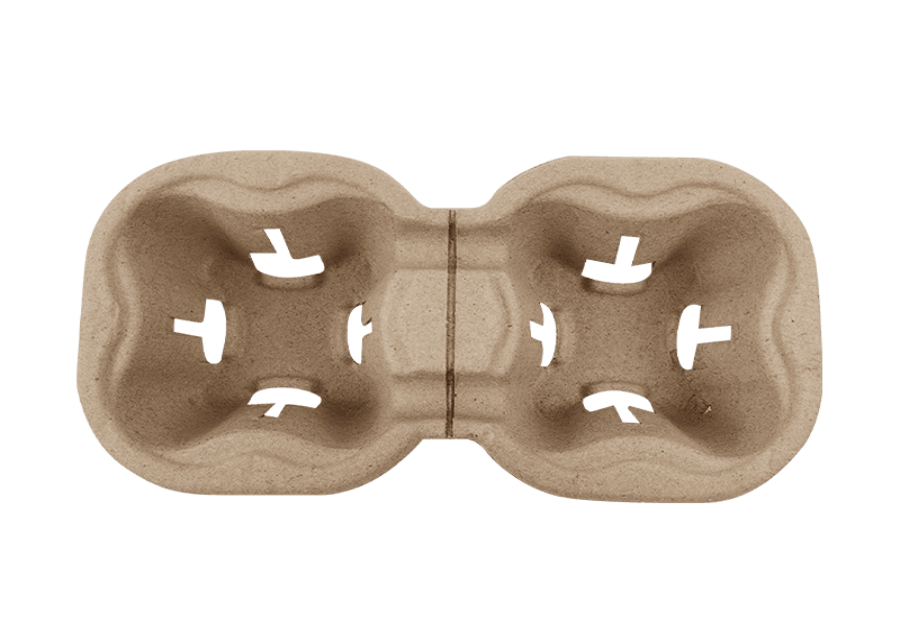
Cup carriers have never been the part of an order anyone thinks about. They're the tray that shows up folded flat in a box, gets assembled in seconds, and disappears the moment a drink is set down on a table. Yet market data tells a different story about where this category is headed. The global cup carriers packaging market was valued at roughly USD 410 million in 2026 and is projected to reach nearly USD 680 million by 2036 — a steady 5.1% annual growth rate that's outpacing plenty of packaging categories with far more attention on them.
One data point explains a lot of that growth on its own: multi-cup carriers, the 2-to-4-cup format, already account for close to half of the category's volume. That share isn't an accident of design preference. It's a foodservice industry consolidating orders — and much like the shift toward cold-cup demand, it's a pattern that tracks closely with how people are actually ordering drinks now, not how they ordered them a decade ago.
Why Delivery Orders Changed What a Carrier Has to Do
A cup carrier handed across a counter has one job: survive the walk to a car or a table. A cup carrier handed to a delivery courier has a longer and rougher trip — a bag, a bike rack or car seat, a set of stairs, sometimes twenty minutes of transit before anyone sets it down. That difference changes what "good enough" means for the product.
Moisture resistance stops being a nice-to-have when a carrier sits in a insulated delivery bag picking up condensation for half an hour. Grip security stops being a nice-to-have when the carrier changes hands two or three times between the restaurant, the courier, and the doorstep. The rise of delivery-only "ghost kitchens" adds another layer: these operations run high volumes of multi-drink orders with no dine-in traffic to absorb the occasional spill, which means the carrier itself is doing more of the work that used to be split between packaging and careful in-person handling. Suppliers who treat a delivery-bound carrier the same as a dine-in one are solving for a problem that no longer matches how the order actually travels — a drink carrier tray range built around multi-cup delivery orders is a direct response to that shift, not a cosmetic upgrade.
Why Bamboo Fiber Is Entering the Cup Tray Conversation
As the category grows, the material conversation around it is widening too. Molded paper has long been the default for cup trays, but bamboo fiber is increasingly part of the discussion as an alternative worth evaluating alongside it — not because it's newer, but because of a few practical advantages that matter more as order volumes climb.
Bamboo fiber trays tend to nest and pack more densely than standard paper trays of the same footprint, which means more units fit into the same container and fewer shipments are needed to move the same volume — a detail that matters more the larger a delivery-driven order book gets. Bamboo fiber also tends to offer more consistent food-grade quality than some recycled paper stock, where inconsistent inputs can introduce odor or variability from batch to batch. And because bamboo is a fast-growing, traceable crop, sourcing can more readily be tied to forestry certifications like FSC, giving buyers a clearer paper trail back to origin. None of this makes bamboo fiber a wholesale replacement for paper trays — it's a material option entering a category that, thanks to delivery-driven volume, now has more reason to care about density, consistency, and traceability than it did a few years ago. For buyers curious about how bamboo-based materials are sourced and certified more broadly, the sourcing and certification questions behind bamboo pulp as a packaging material apply in largely the same way to trays as they do to cups.
What the Growth Actually Reflects
None of this is a coincidence layered on top of an already-growing packaging industry. It's a fairly direct, traceable consequence of how people order food and drink now — more items bundled per order, more of those orders traveling further before they're opened, and more operators running kitchens that never see a dine-in customer at all. The cup carrier didn't get more important because someone redesigned it. It got more important because the orders around it changed shape first.
For suppliers, the practical takeaway isn't just to keep up with volume. It's to notice that the category's growth is concentrated in exactly the formats and material properties that delivery demands — multi-cup capacity, moisture resistance, secure handling, traceable sourcing — and to treat those as the actual product brief, rather than an afterthought bolted onto a tray that was designed for a counter handoff.