Industry Knowledge
Barrier technology and why double-PE matters for cold drinks
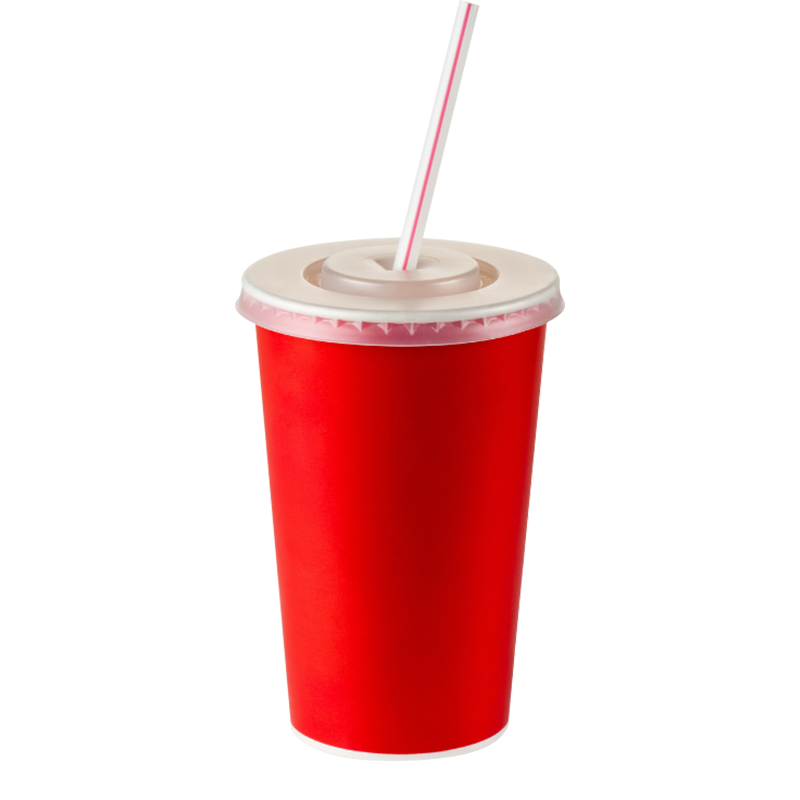
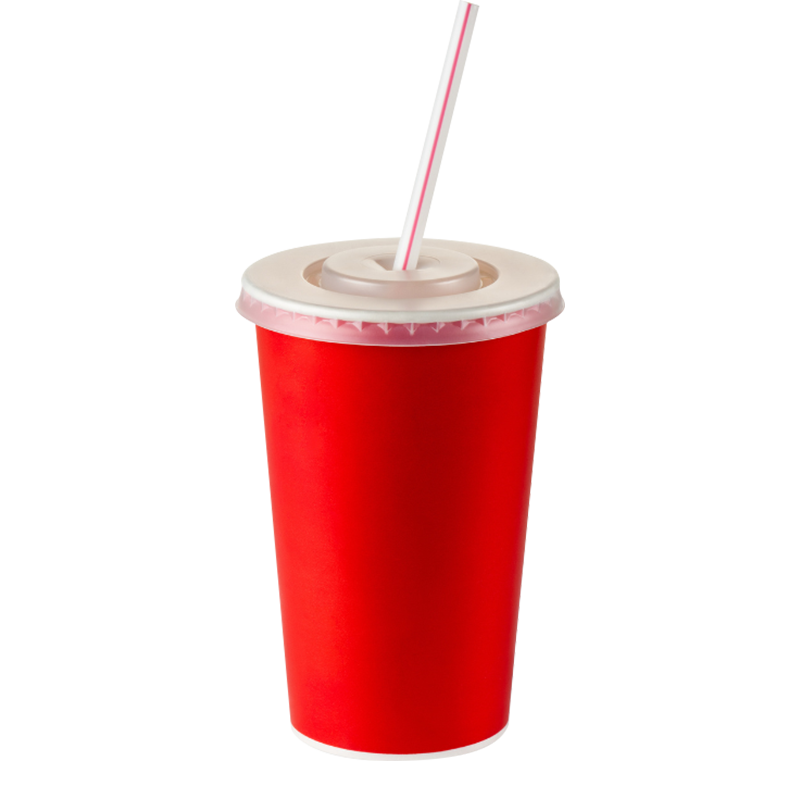
When a paper cup is used for cold beverages the two greatest technical challenges are moisture ingress (from condensation) and maintaining dimensional stiffness at low temperatures. Double-PE (polyethylene) lamination applies two separate thin PE layers to the food-grade paper substrate: one to seal fibrous pores and one to form an external moisture shield. This layered approach reduces water vapor transmission rate (WVTR) far more effectively than a single coat, so the paper’s cellulose fibers don’t soften or delaminate when condensation forms on the surface. In practice this means fewer soggy rims, preserved stacking strength in transport, and reliable leakage resistance during prolonged use.
Practical cold-use failure modes and how to prevent them
Understanding how failures occur lets you design mitigation into the cup and the service environment. The most common cold-use failures are softening (loss of stiffness), edge delamination, and seam leakage. Each has a predictable cause and countermeasure:
- Softening: caused by water penetration into paper fibers. Prevent with a full-surface polymer barrier and ensure the PE layer is continuous across the rim area.
- Edge delamination: results from poor bonding at the cup curl or lip. Specify curl adhesion tests and use reinforced curling parameters during forming.
- Seam leakage: usually from inconsistent seam heat or adhesive feed. Control seam temperature and inspect seam compression and adhesive coverage during line setup.
Printing, inks and customization that survive cold and condensation
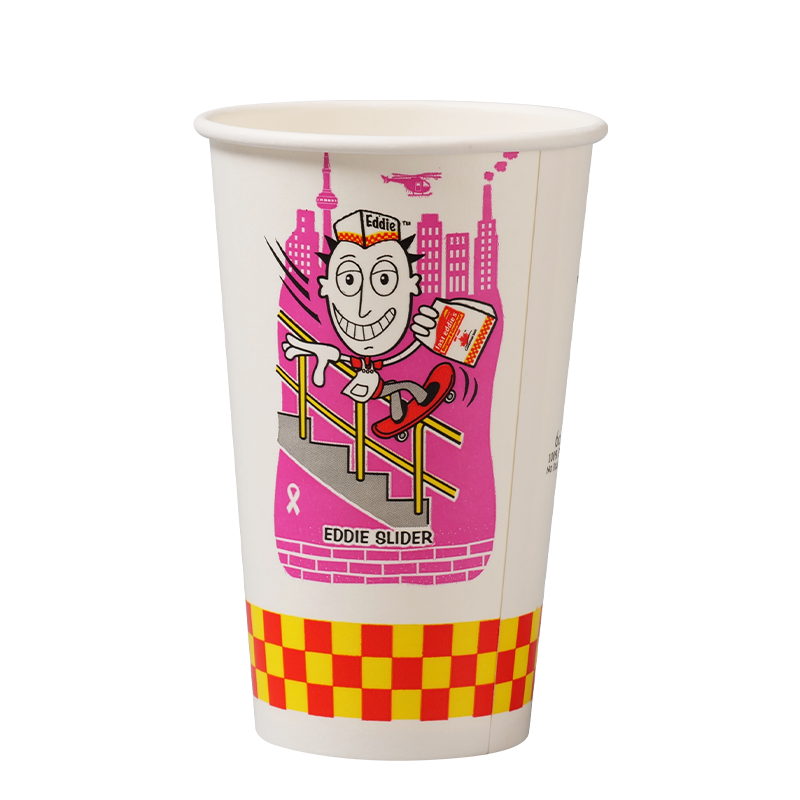
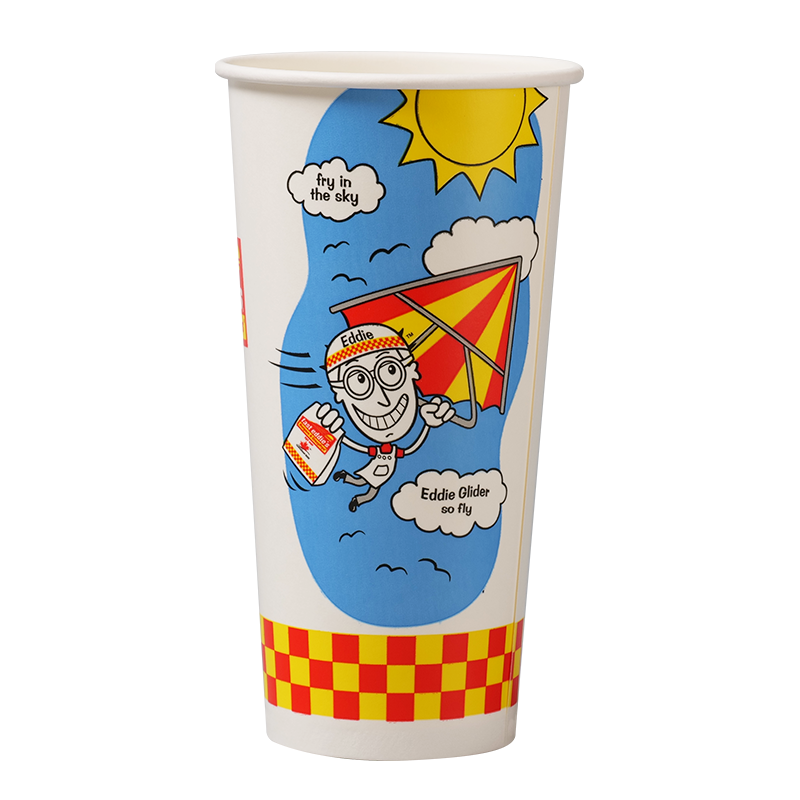
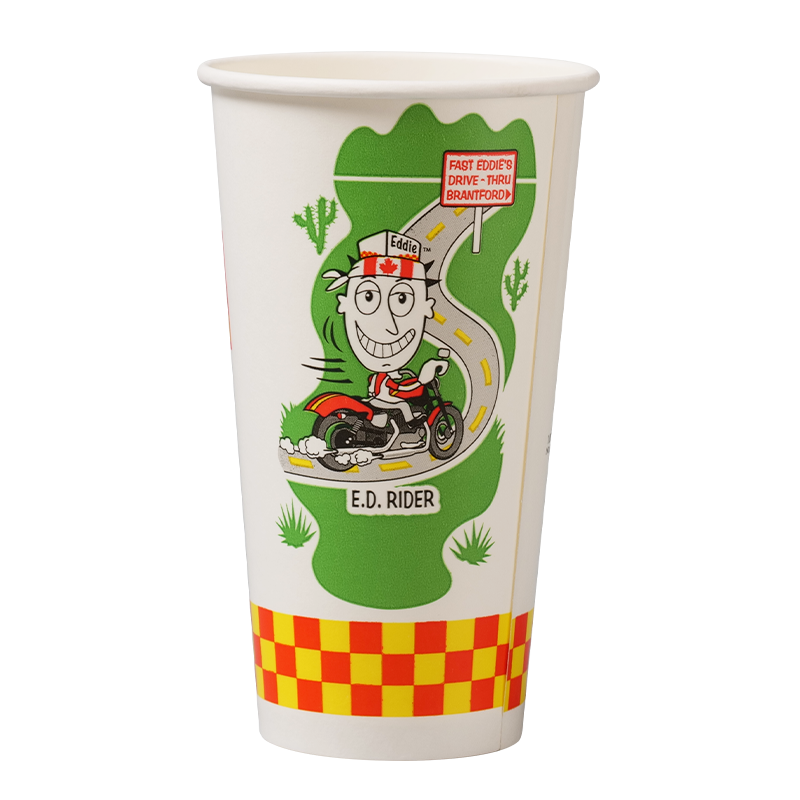
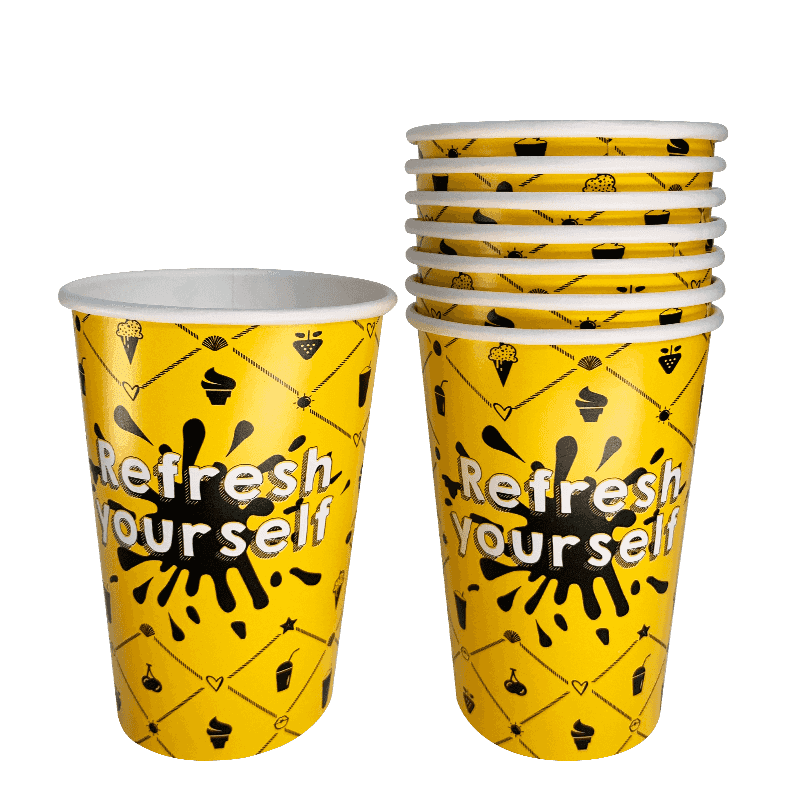
Printed graphics on cold drink cups face abrasion from ice, rubbing from hands with condensation, and potential ink migration when water pools. Choosing the right ink system and printing sequence is critical: water-based flexo inks with a post-print protective varnish, or UV-cured inks followed by a thin over-laminate, significantly outperform unprotected water-based prints in wet conditions. We provide tailored artwork layouts and protective varnish options so your branding remains crisp after hours in a customer’s hand.
Best practices for artwork and press setup
Use 3–5 mm bleed around design edges to avoid visible trim shifts. Avoid fine isolated text blocks near the curl where mechanical stress concentrates. Calibrate color proofs at the specified lamination temperature because PE lamination can slightly shift color tone. If you want very high-impact finishes, we can recommend spot varnish or matte/soft-touch coatings without compromising the barrier—ask us which finish suits your brand.
Compatibility with beverage types and temperature guidance
Not all “cold” liquids impose identical stresses. Carbonated drinks add pressure and micro-bubbling against seams; frozen slushies create thermal shock and localized freezing; dairy-based drinks can interact with inks and adhesives differently than clear sodas. Typical working guidance for double-PE cold cups:
- Cold still drinks (0–5°C): standard double-PE cups are suitable for multi-hour use.
- Carbonated beverages: choose cups with reinforced seam compression and perform carbonation pressure checks on the production run.
- Slush/frozen blends: use cups specified for thermal cycling and validate with freeze–thaw tests; consider thicker paperboard grades for extended frozen exposure.
Quality control: tests and acceptance criteria
A robust QC protocol reduces customer complaints. Key tests that we (and the industry) typically run on cold drink paper cups include:
- Water vapor transmission rate (WVTR) testing to quantify barrier performance.
- Condensation soak: cups filled with chilled water then held at 4°C to check for softening or leakage over time.
- Seam peel and seam compression measurements to ensure consistent formation on every shift.
- Abrasion and rub tests on printed surfaces to verify ink/varnish adhesion under wet handling.
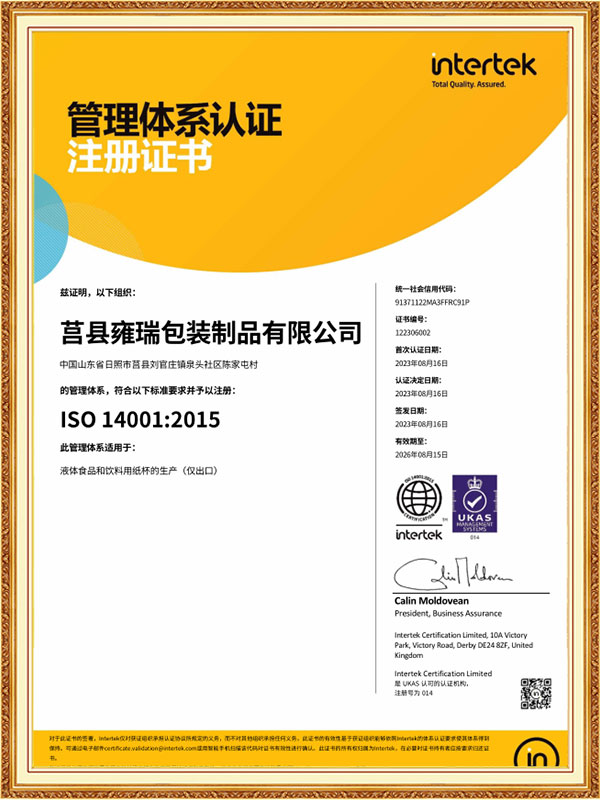
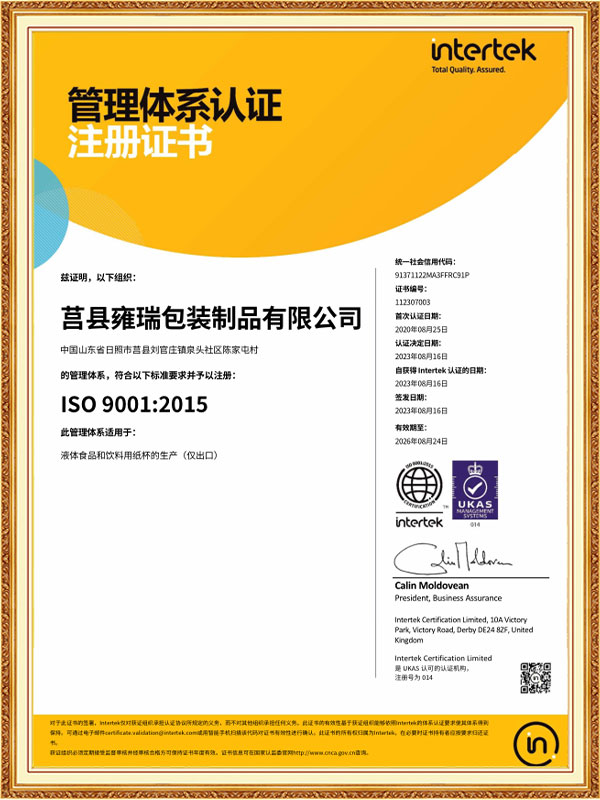
We run these checks as part of our production acceptance and can share batch-level QC certificates on request.
Barrier materials comparison (practical differences)
| Coating / Laminate |
Typical WVTR (qualitative) |
Cold-use advantages |
| Single PE |
Moderate |
Cost-effective but less robust to prolonged condensation. |
| Double PE |
Low |
Superior moisture resistance, better stiffness retention—recommended for extended cold use. |
| PLA (bioplastic) coating |
Variable |
Compostable options available but performance can vary with humidity and storage—validate for your use case. |
End-of-life, recycling and sustainability trade-offs
Double-PE laminated cups are highly effective in use but create a recycling challenge because the PE layer is bonded to the paper. Mechanically separating the layers is difficult for many municipal recycling streams. Options to improve sustainability without sacrificing performance include using mono-material systems (e.g., PE-only liners designed for industrial recycling), investing in industrial compostable coatings where local composting infrastructure exists, or partnering with takeback programs that can process laminated cups. Be explicit about local disposal guidance on the cup—this small label reduces contamination in recycling and compost streams.
Design & regulatory considerations for labeling and branding
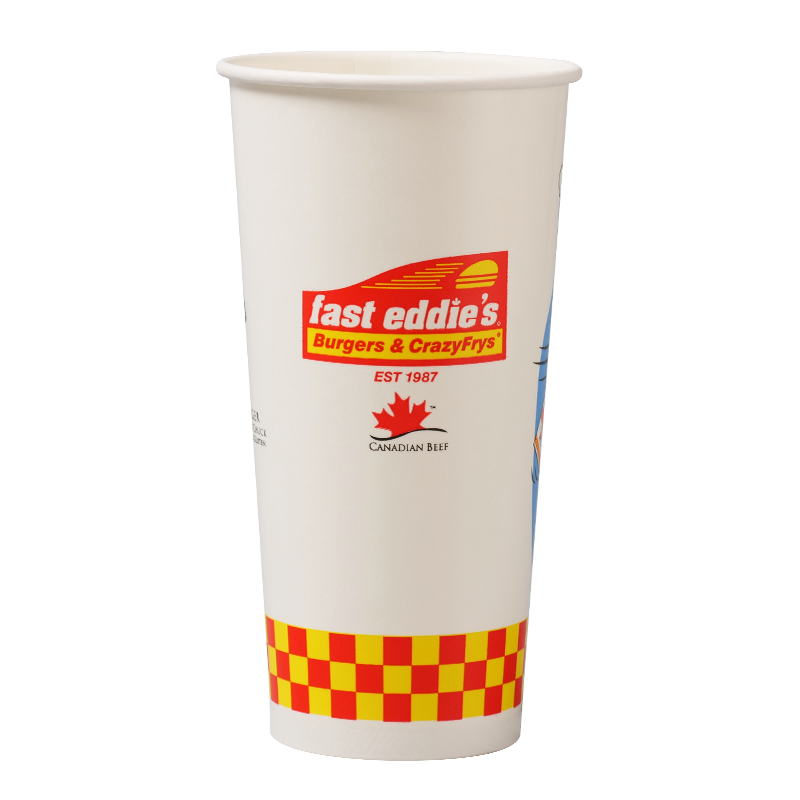
Beyond aesthetics, label placement and regulatory content (food contact declarations, allergen statements if applicable, recycling symbols) must survive wet handling and remain legible. Use UV inks or protected overlaminates for statutory text that must be readable for the product’s lifetime. If you want your logo to stay flawless on every busy shift, we can design press-ready dielines and test proofs that show how the finished cup will look under condensation and handling—ask us and we'll prepare a mockup.
 +86-18863350588
 English
 Français
 Deutsch
 Español