+86-18863350588
 English
 Français
 Deutsch
 Español

Ventilation Design in Fruit Paper Containers: Key to Extending Freshness

Fruit spoils from the inside out — and the container around it either slows that process or accelerates it. Two mechanisms drive most produce loss after harvest: the buildup of ethylene gas, which signals fruit cells to soften and decay, and the accumulation of moisture, which creates the humid surface conditions that mold needs to establish itself. Ventilation design in a fruit paper container addresses both problems simultaneously. Get it right, and shelf life extends by days. Get it wrong, and even perfectly fresh produce arrives soft, sweating, or spotted.
The Two Enemies: Ethylene and Moisture
Ethylene is a natural plant hormone that all ripening fruit emits as a gas. In open air, it disperses harmlessly. Inside a sealed or poorly ventilated container, it concentrates — and that concentration feeds back into the fruit, triggering faster softening, color breakdown, and eventual rot. The effect compounds quickly: as one piece of fruit overripens, it emits more ethylene, which accelerates the ripening of everything around it.
Moisture operates on a parallel track. Fruit respires continuously, releasing water vapor as part of its metabolic process. In an enclosed space, that vapor has nowhere to go. It condenses on container walls and lids, then drips back onto the fruit surface — creating exactly the wet microenvironment that mold spores require. The combination of trapped ethylene and surface condensation is the primary cause of premature spoilage in packaged fresh produce.
Ventilation breaks both cycles. Airflow carries ethylene out of the container before it reaches damaging concentrations, and it allows water vapor to escape before it condenses. A well-ventilated fruit container does not just slow spoilage — it removes the conditions that make spoilage possible.
How Vent Hole Design Controls Gas Exchange
Not all ventilation performs equally. The number, size, and placement of vent holes determine how effectively a container moves air — and the design choices involve real trade-offs between gas exchange, structural integrity, and moisture control.
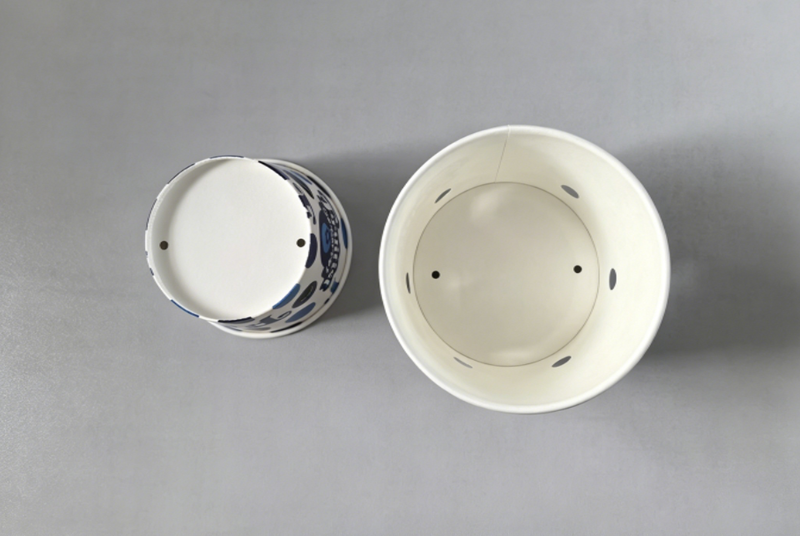
Hole placement matters more than most buyers expect. Bottom vents allow condensed moisture to drain away from the fruit rather than pool beneath it — a critical detail for berries, which bruise and mold from the base first. Side-wall vents drive lateral airflow that sweeps ethylene out of the interior space. Top-lid perforations create a chimney effect when combined with bottom vents, drawing fresh air upward through the container. Research on perforated containers for cherries and strawberries published in peer-reviewed food science literature found that containers with macro-holes distributed across the base, side walls, and lid maintained significantly better postharvest quality over extended cold storage compared to sealed packaging.
Hole diameter affects the balance between ventilation and dehydration. Larger holes increase airflow but also increase the rate at which moisture leaves the container — which is desirable up to a point, but can cause surface dehydration in produce stored for longer periods. Smaller, denser perforations achieve more uniform gas exchange with less dehydration risk. For a detailed breakdown of how these variables interact in commercial fruit container specifications, the ventilation, sizing, and branding guide for fruit paper containers covers the full range of design parameters.
Paper as a Substrate: Built-In Breathability
One advantage that paper containers hold over plastic clamshells is often overlooked: the substrate itself is microporous. Paper fiber is not airtight. At a microscopic level, gas molecules move through the wall material continuously — a passive ventilation layer that operates independently of any punched holes.
This matters because it means a paper fruit container provides two tiers of gas management. The macro-holes handle bulk airflow — the rapid exchange that clears ethylene and moisture from the interior. The paper wall itself handles slow, continuous diffusion — a gentler, distributed process that prevents sharp humidity spikes between the fruit surface and the ambient environment. Together, they create a more stable microclimate inside the container than any equivalent plastic format can achieve through perforation alone.
The practical implication is that paper containers can use fewer or smaller macro-holes without compromising overall ventilation performance. This gives manufacturers more design flexibility to maintain structural rigidity — since every hole is also a point of potential weakness under load — while still meeting the gas exchange requirements of fresh produce.