+86-18863350588
 English
 Français
 Deutsch
 Español

Cost in the Cup, Consequence in the Jam: The Engineering of Reliable Vending Paper Cup
Content
- 1
- 2 What makes a vending paper cup “vending-grade” (and why it matters)
- 3 Dimension checklist: match your vending machine before you place a PO
- 4 Material and coating choices that affect vending performance
- 5 Anti-jam engineering: rim roll, taper control, and stack consistency
- 6 Storage and loading practices that protect dispensing reliability
- 7 Sustainability and compliance: what procurement teams increasingly require
What makes a vending paper cup “vending-grade” (and why it matters)
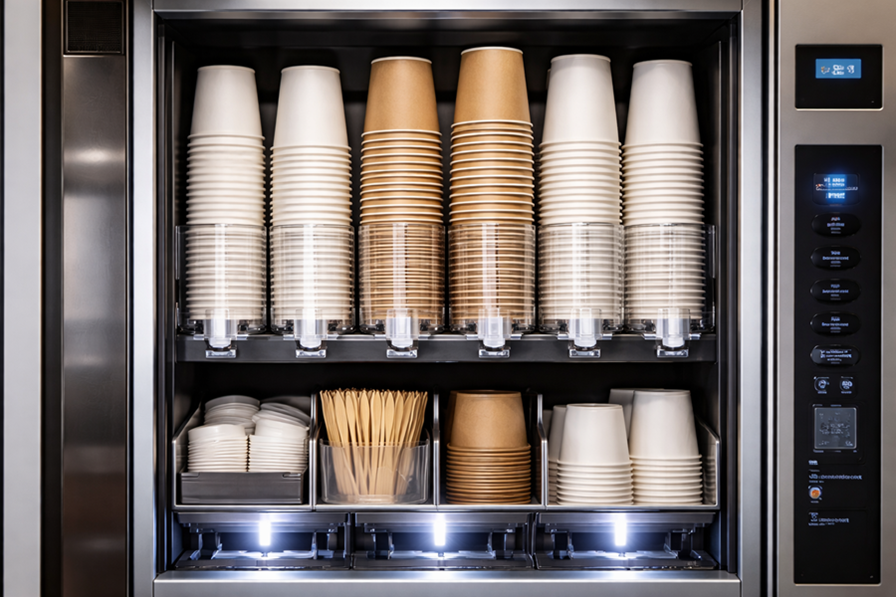
A vending paper cup is not simply a smaller disposable cup—it is a component that must run reliably through a specific dispensing mechanism. In real vending operations, the cost of a jam is rarely the cup itself; it is the service call, downtime, and lost consumer confidence. That is why vending-grade cups are engineered around repeatability: consistent rim geometry, stable nesting friction, and controlled cup taper so the stack feeds one cup at a time.
From a manufacturer’s perspective, the practical goal is simple: the cup should drop or transfer smoothly, without sticking (double-dispense) and without catching (jam). Achieving that goal depends on tight control of dimensions such as rim diameter, bottom height, and cup wall taper—plus material choices that keep stiffness and friction stable under humidity and heat.
Typical failure modes buyers should design out
- Jams at the dispenser lip when the rim roll profile or rim diameter is inconsistent.
- Double-dispense when nesting friction is too low (often linked to coating uniformity and curl consistency).
- Sticking (cups not separating) when humidity changes the paper’s inner diameter and surface friction.
Dimension checklist: match your vending machine before you place a PO
Most vending cup issues start with a mismatch between cup geometry and the dispenser’s guide rails, sensors, and drop path. Before ordering any vending paper cup, we recommend confirming the machine’s “critical dimensions,” then selecting a cup family built around those parameters.
Critical dimensions to measure (or request from your machine OEM)
- Rim / top diameter: determines fit in the cup turret, rails, and sensor detection area.
- Bottom diameter: affects nesting depth and stability of the column of cups.
- Height: impacts stack capacity and whether the cup clears chutes and gates during dispense.
- Bottom height (the “foot”): small variations here can change how cups sit and separate.
- Curl profile and curl radius: the rolled rim must be repeatable to avoid edge catches.
In production, we typically manage dimensional repeatability with process controls and sampling plans. As a practical baseline for vending applications, many buyers target rim diameter tolerance around ±0.5 mm and bottom height control within ±0.8 mm to reduce jam risk and feeding variation.
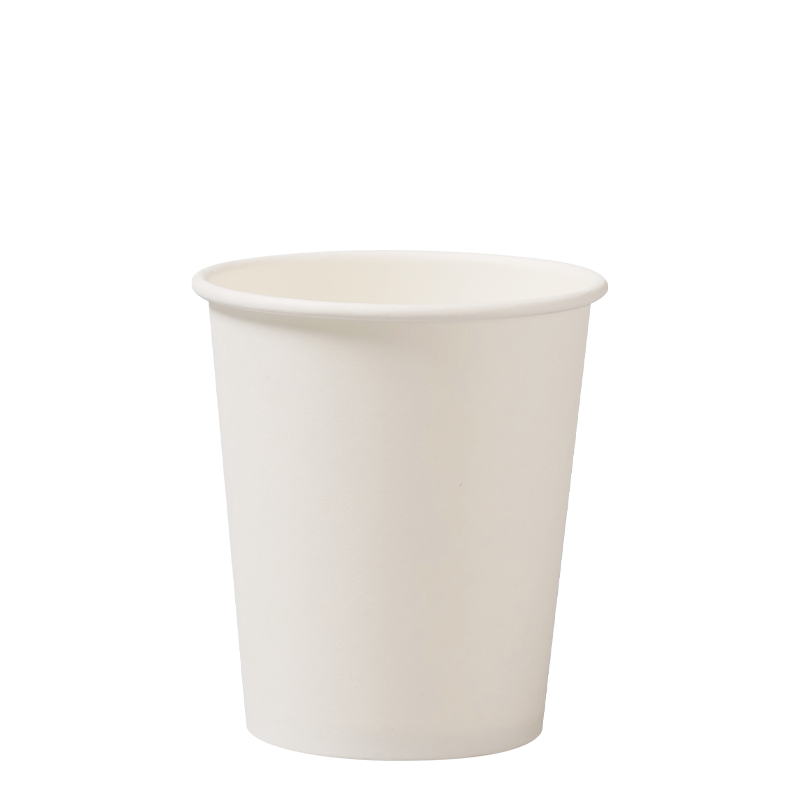
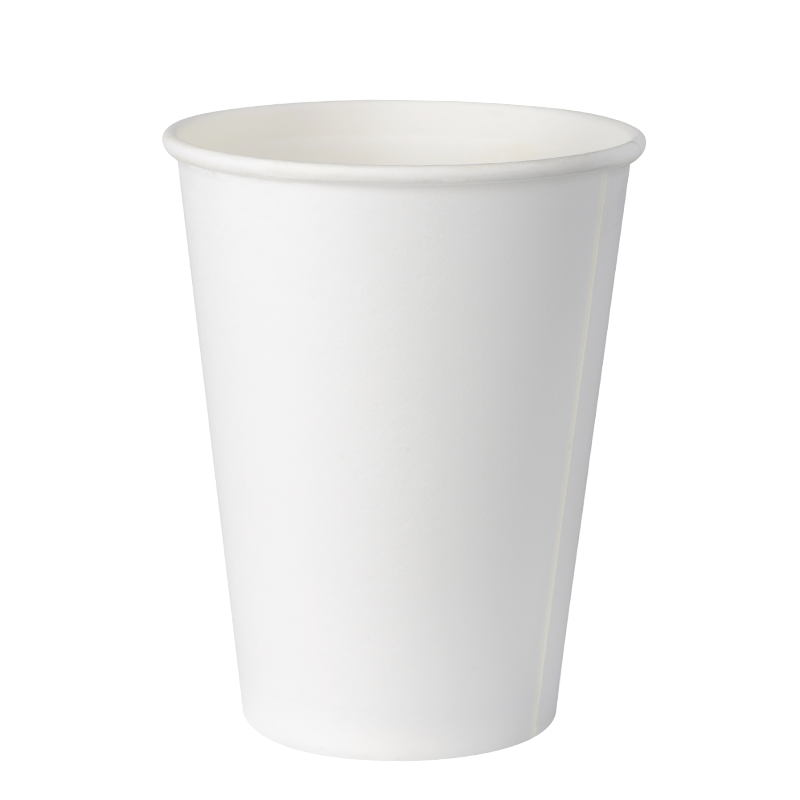
If you want a ready reference for common size families, you can compare your machine requirements against the vending paper cup specifications and then confirm using physical samples on your dispenser.
| Size | Capacity (ml) | Top (mm) | Bottom (mm) | Height (mm) | Bottom Height (mm) | Pcs/Bag | Qty/Ctn |
|---|---|---|---|---|---|---|---|
| 3oz | 90 | 56.9 | 40 | 60 | 5 | 50 | 1000 |
| 6oz (family) | 150 | 70 | 45–48 | 79.6–80 | 4–5 | 100 | 2500–3000 |
| 6.5oz | 180 | 70 | 46 | 85 | 5 | 100 | 3000 |
| 7oz (family) | 200 | 70 | 43.35–46.4 | 92–93 | 4–5 | 100 | 2000–2500 |
| 9oz | 260 | 72.8 | 48 | 100.3 | 5 | 50 | 1000 |
| 12oz | 300 | 80 | 53 | 115 | 6.7 | 50 | 1000 |
Practical note: “same ounce size” is not enough. Two 7oz cups can share the same nominal capacity but differ in bottom diameter and bottom height, which changes how tightly they nest and how consistently the machine separates them.
Material and coating choices that affect vending performance
For vending, material selection is about mechanical stability and repeatable friction—especially because cups are stored in stacks, shipped through different climates, and dispensed under dynamic forces. In our experience, the strongest results come from aligning paper stiffness, coating uniformity, and curl quality with the machine’s feed method.
Paper weight and stiffness: match the drink and the stack height
A vending paper cup must resist deformation under stacking pressure and hot-fill conditions. As an example of common manufacturing ranges, small vending cups often use 190–210g food-grade paper, while larger sizes may use 210–230g or even 260–290g paper to maintain rigidity as volume and height increase.
Coating selection: moisture barrier vs. nesting friction
Coatings are not purely about leak resistance. They also influence surface energy and the “feel” between nested cups—two drivers of separation reliability. Typical options include PE, PLA, and aqueous coatings, plus reduced-PE options (such as PE coating below 5%) depending on your compliance targets and end-market expectations.
For vending applications, coating consistency is often more important than coating type. In thin PE applications, some buyers manage coat weight in a narrow band (for example, 2.0–3.0 g/m²) to keep friction stable and prevent “too sticky” or “too slippery” nesting behavior.
Printing: durability and food-safety without odor transfer
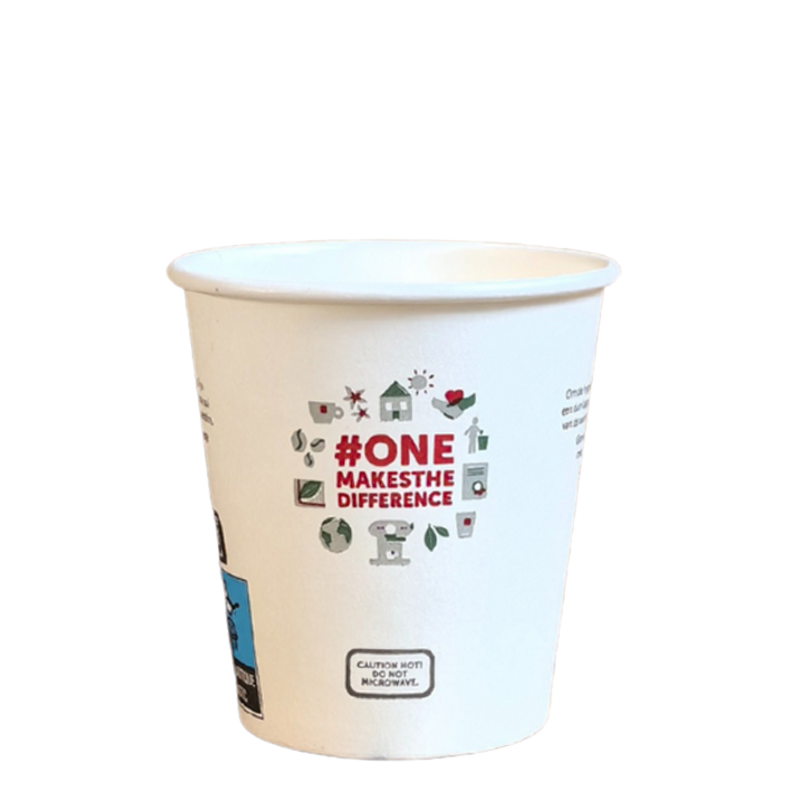
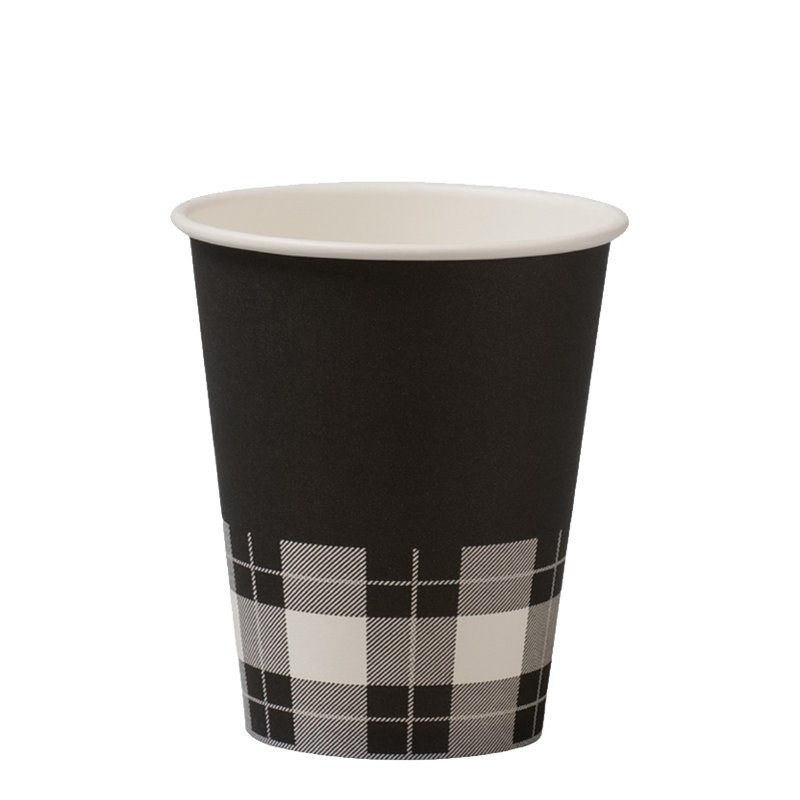
If your vending program includes branding, printing must survive handling and humidity without ink odor or migration concerns. Food-safe, water-based ink systems and controlled flexo printing (commonly up to 1–9 colors) are widely used for vending cups because they balance image clarity with suitability for food-contact applications.
Anti-jam engineering: rim roll, taper control, and stack consistency
Most “mystery jams” come down to geometry. Vending mechanisms interact with a few contact points—especially the rim and the way cups nest—so the safest strategy is to reduce variability at those points. That is why vending paper cups typically emphasize an engineered rim roll and controlled taper, supported by forming parameters that keep stacks consistent from carton to carton.
Two manufacturing approaches are particularly important: an exclusive rim diameter design (to reduce jam risk in the intended dispenser) and parameter-controlled forming (to keep the cup column stable and repeatable). When these are executed well, operators typically see fewer dispense faults and more predictable service intervals.
If you are comparing suppliers, ask how they control the rim roll profile across shifts and across tooling. The most useful answer is not “we do QC,” but a clear description of what they measure (rim diameter, bottom height, curl profile), how often they measure it, and what their reject and rework rules are.
For buyers who want to review a complete product family, our vending paper cup range is organized by size so you can align your dispenser requirements with a consistent geometry set.
A practical qualification metric: simulate dispensing, not just dimensional checks
Dimensional inspection is necessary, but vending performance is ultimately a system test. A simple, high-signal method is a controlled in-machine trial: dispense cycles at full stack height and at partial depletion. Many operators use acceptance targets such as >98% single-dispense over 100 cycles on the same machine configuration to validate a new cup lot.
Storage and loading practices that protect dispensing reliability
Even a well-made vending paper cup can perform poorly if storage conditions change its dimensions or surface friction. Paper is hygroscopic—humidity can increase nesting friction or shift diameters slightly, which is enough to affect separation behavior in sensitive dispensing heads.
As a practical operating guideline, many vending programs store cups in a controlled range such as 20–25°C and 40–60% relative humidity, and they keep cartons sealed until loading. This reduces moisture uptake and helps preserve the “as-produced” nesting behavior.
On-site measures that reduce jams and double-dispense
- Keep cups in sealed cartons until the moment of loading to prevent moisture pickup during humid days.
- Avoid storing cartons near heat sources; softening coatings can change friction and separation behavior.
- Rotate stock (FIFO) and record lot codes so any field issue can be traced to a specific production run.
- If faults increase seasonally, measure a small sample’s rim diameter and bottom height; small drifts often correlate with environmental changes.
Sustainability and compliance: what procurement teams increasingly require
Many buyers now evaluate vending paper cups on two axes: dispensing reliability and documented sourcing. On the sourcing side, request clarity on paper origin and chain-of-custody options—especially if you supply corporate sites, transport hubs, or public-sector facilities where documentation requirements are more formal.
Documentation to request from a serious vending cup supplier
- Chain-of-custody options (for example, FSC and EUDR-aligned paper programs, and equivalent PEFC routes where applicable).
- Food-contact and safety documentation relevant to your market (including material declarations and test reports if required).
- Quality and environmental management certifications such as ISO systems, plus food packaging certifications where appropriate.
- Clear statement of coating type (PE, PLA, aqueous, reduced-PE) and performance trade-offs for vending separation.
Sustainability changes should be managed like an engineering change. If you shift coating chemistry (for example, from PE to PLA or aqueous), expect friction and moisture behavior to change, and plan additional dispenser trials before full rollout.
All products can be customized according to your needs. Feel free to email us at [email protected] for more product information and customization solutions.