+86-18863350588
 English
 Français
 Deutsch
 Español

PPWR Regulation Explained: What Food Packaging Businesses Must Know
Content
What Is the PPWR?
Packaging waste in the EU has grown by over 20% in the past decade — and without action, it was projected to climb another 19% by 2030. That figure, combined with the reality that packaging accounts for the carbon footprint of a small EU nation, is what drove regulators to act. The result is Regulation (EU) 2025/40 — the Packaging and Packaging Waste Regulation (PPWR), formally adopted on 19 December 2024 and in force since 11 February 2025.
The PPWR replaces the old Packaging Directive (94/62/EC), which had been in place for thirty years. The critical difference: the previous directive had to be transposed into national law by each Member State, resulting in fragmented, inconsistent enforcement. The PPWR is a directly applicable regulation — the same rules, simultaneously, in all 27 EU countries. Any packaging placed on the EU market, regardless of where it was manufactured or what material it is made from, must comply.
Most provisions take effect from 12 August 2026, giving businesses an 18-month transition window that is closing fast.
Key Requirements You Need to Know
The PPWR's core packaging sustainability requirements span four interconnected areas:
- Recyclability by design. From 1 January 2030, all packaging on the EU market must be designed for recycling — meaning every component must be compatible with large-scale collection, sorting, and reprocessing systems. A performance grading system (A through C) will determine which packaging may remain on the market; by 2038, only grades A and B will be permitted.
- Minimum recycled content in plastics. Starting 2030, plastic packaging must incorporate mandatory post-consumer recycled (PCR) content. Contact-sensitive PET packaging (excluding single-use beverage bottles) must reach 30% PCR by 2030 and 50% by 2040. Other contact-sensitive plastic formats must achieve 10% by 2030 and 25% by 2040.
- Packaging minimisation. Unnecessary packaging is explicitly prohibited. Empty space in parcels must not exceed 40% of total volume. The European Commission will establish detailed minimisation methodologies before February 2028, with binding requirements coming into force by 2030.
- Harmonised labelling. Confusing and inconsistent recycling symbols will be phased out. A standardised EU-wide labelling system — covering sortation instructions, recycled content claims, and reusable packaging identification — is scheduled to apply from August 2028.
Extended Producer Responsibility (EPR) is also central to the PPWR. Producers — including importers and online sellers shipping into EU countries where they are not established — must register with national authorities and bear the costs of collection, recovery, and recycling of their packaging.
PPWR Compliance Timeline
| Date | Milestone |
|---|---|
| 11 Feb 2025 | PPWR enters into force, replaces old Packaging Directive |
| 12 Aug 2026 | Core PPWR provisions apply across all EU Member States |
| Aug 2028 | Harmonised recycling labels mandatory on all packaging |
| 1 Jan 2030 | All packaging must meet recyclability grades A–C; recycled content targets for plastics kick in |
| 1 Jan 2035 | Recyclability must be demonstrated at scale in practice |
| 1 Jan 2038 | Only grades A and B permitted; grade C packaging phased out |
The staggered timeline gives businesses a window to adapt — but 2026 is not a soft deadline. From August that year, non-compliant packaging can be rejected at EU borders and removed from shelves. Companies that have not yet audited their packaging portfolio should treat that date as a hard cut-off.
What This Means for Food Packaging
For food and beverage packaging specifically, the PPWR creates both pressure and opportunity. The pressure is clear: single-use plastic formats face the strictest scrutiny, and any packaging that cannot demonstrate a clear recyclability pathway will eventually lose market access. The opportunity lies in materials that already align with where regulation is heading — and paper is the most prominent example.
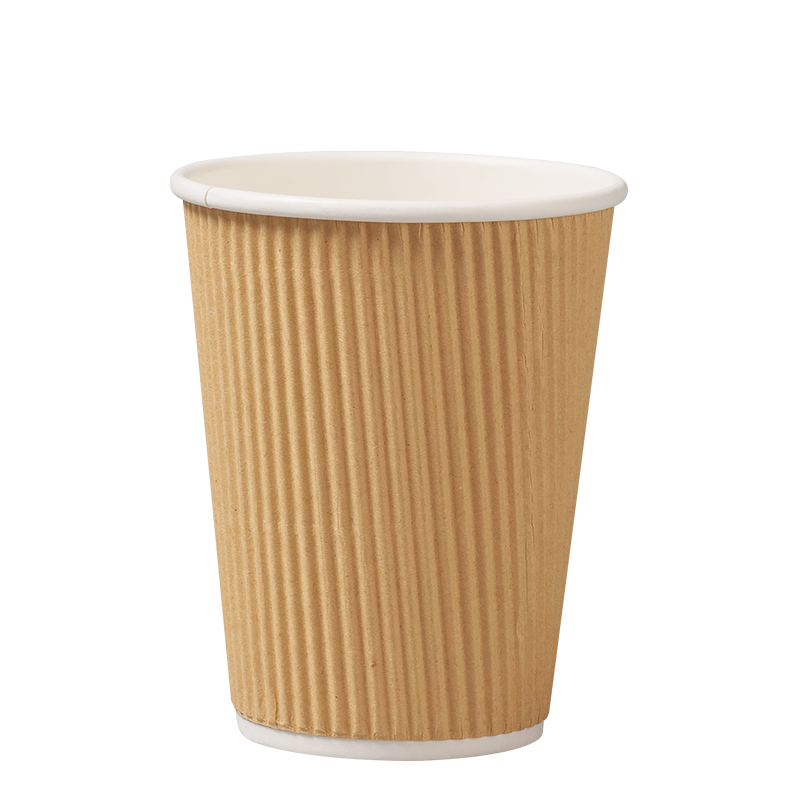
Paper-based food packaging — cups, bowls, trays, and containers — is inherently compatible with the PPWR's design-for-recycling framework. Unlike multi-layer plastic laminates that resist separation, paper packaging can be engineered with minimal or no plastic coating while retaining performance. Options such as aqueous-coated and PLA-lined paper cups are already widely adopted as alternatives to conventional PE-coated formats, reducing the barrier to recyclability compliance. Similarly, eco-friendly paper cups designed for recyclability give brands a concrete, auditable answer to "how is this packaging designed for end-of-life?"
The PPWR also rewards packaging that is easy to sort and label. Paper packaging is well-understood by existing collection and sorting infrastructure across Europe, which reduces compliance risk compared to novel materials with unproven recycling pathways.
For procurement teams and F&B brands sourcing packaging for EU markets, the decision framework is shifting. Price per unit still matters, but PPWR compliance — demonstrated recyclability, appropriate material selection, EPR registration status — is becoming a procurement prerequisite, not a nice-to-have. Working with suppliers who already offer biodegradable and recyclable food packaging solutions compresses the compliance timeline considerably, since the material and design groundwork is already in place.
The PPWR is not a future problem. With August 2026 approaching, the decisions businesses make now about packaging design, supplier partnerships, and EPR registration will determine whether they face market disruption or a smooth regulatory transition.